
Spotlight: Laysan Rail
Extinct bird from the Northwestern Hawaiian Islands

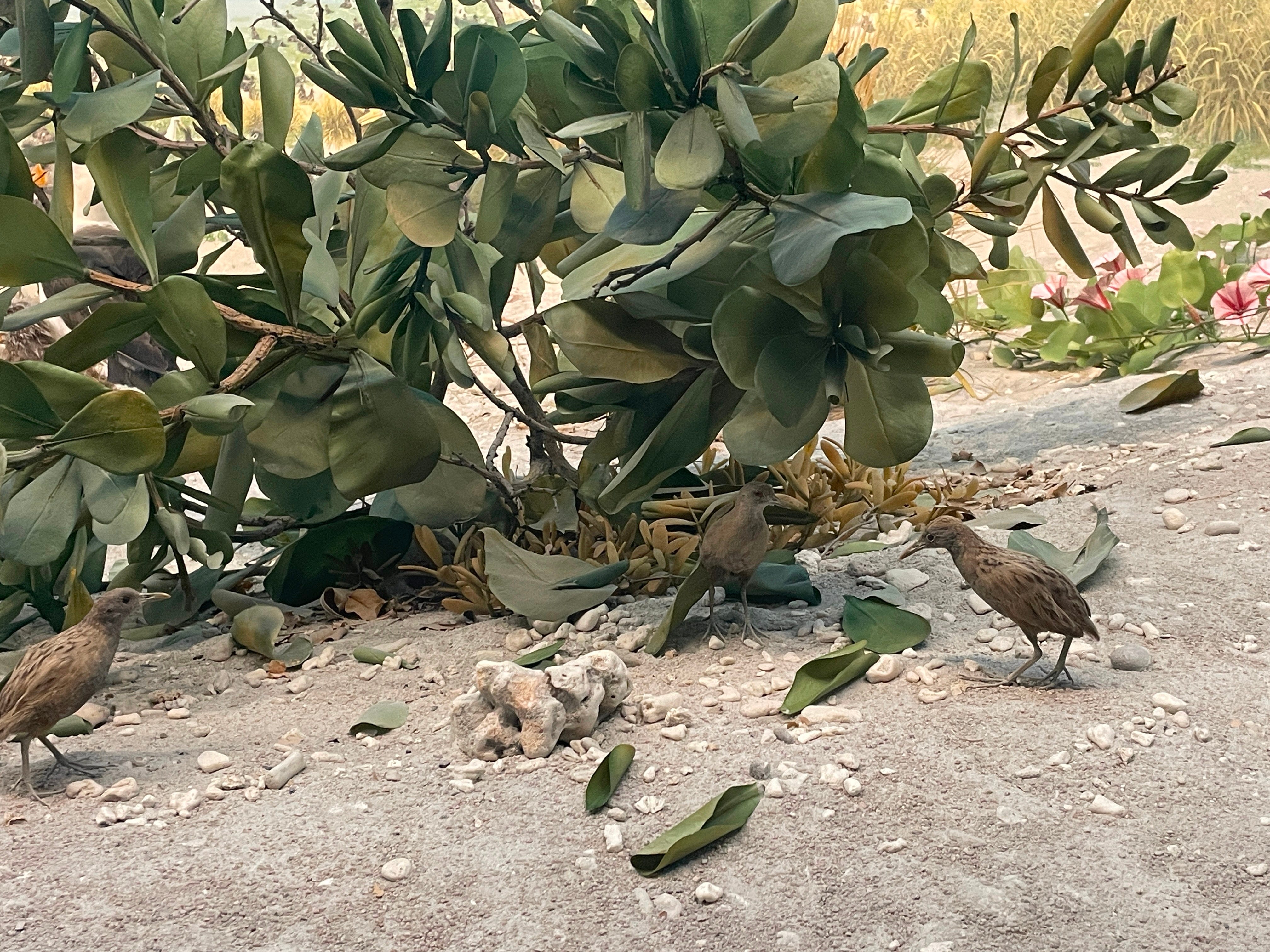
Earlier this summer, I went to the Denver Museum of Natural Science. I’ve been to Denver many times, but I never thought to actually come in as a sightseeing tourist up until recently. You kind of forget to do all that once you’ve been to the state as many times for ski races.
I actually came at a perfect time, since this was one of the museum’s free entry days. Aside from the large crowd, I thoroughly enjoyed my experience there and highly recommend checking it out.
Of the three dioramas present of recently extinct birds, the Laysan rail stood out to me. I heard of the bird before in passing, but I don’t think I’ve actually looked into it. At least not as extensively as other extinct birds. It’s a cute little bird; it’s unfortunate that I won’t ever get to see alive.
What stood out to me when I first saw it was its little spots speckled around its brown plumage. In all honesty, it was very hard to look for because it blended in so well. I did a sketch at the museum of the diorama, but it’s hard to make out the features of the bird. You can’t capture the speckles with just black ink.
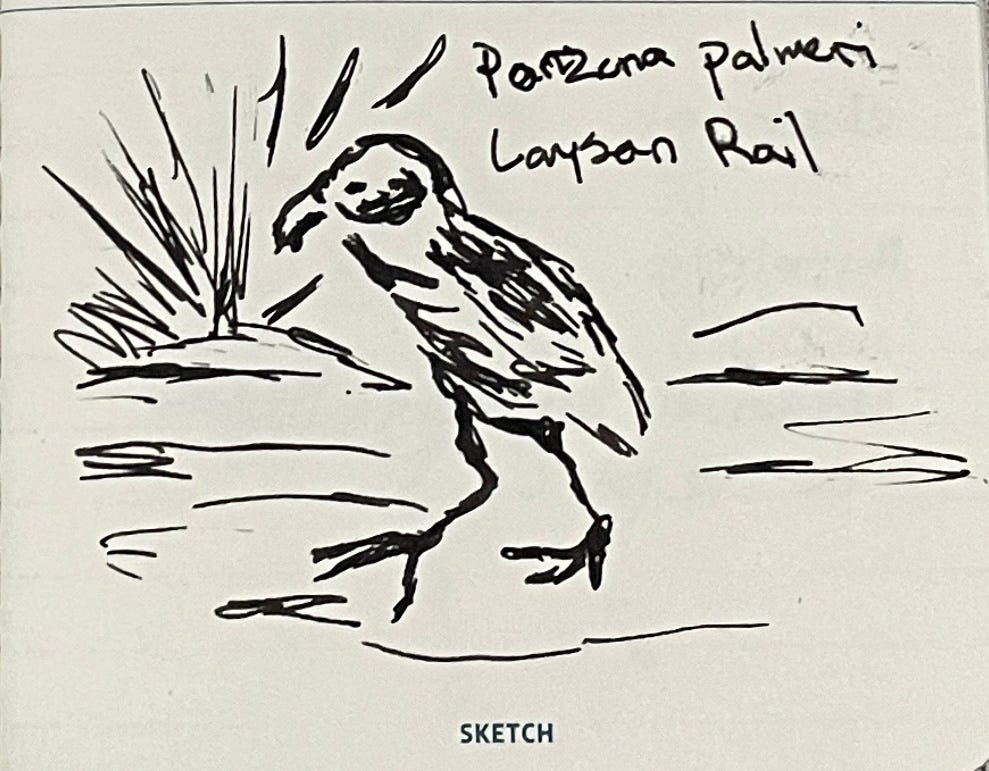
A flightless bird from the Hawaiian Islands, the Laysan rail (Zapornia palmeri) was one of five unique species. When rabbits were introduced to the islands, the vegetation shielding the bird’s nests were entirely scraped, turning the island into a wasteland. With no natural predators to keep the rabbits in check, the number of birds decreased. The native millerbird and honeycreeper also went extinct on the island as well.
According to IUCN Redlist, the bird was last seen in 1944 and thought to have been exterminated by rats after being introduced to the Eastern Islands.
The Northwestern Hawaiian Islands support the largest seabird colonies in the world, with the Midway Atoll supporting the largest number of nesting Laysan albatrosses.
The Laysan finch and Laysan duck live on the island today. Both of which were nearly driven to extinction in the early 1910s but making a staggering recovery since.
More Media:


Further Reading:
Birds of the World: Laysan Rail
Field Notes: The Crucible on Laysan Island
The Tragedy Of This Lost World Of Birds